
The S&P BSE Midcap and the S&P BSE Smallcap indices have managed to stay afloat in a volatile January that saw the frontline indices hit their respective 52-week high levels and then slip. While the S&P BSE Sensex has lost over 2 per cent thus far in January, the S&P BSE Midcap and the S&P BSE Smallcap indices have gained nearly 2.5 per cent and 4 per cent, respectively during this period.

>It's not easy to predict the market. But there are at least two positive factors to back the PSU banks, explains Tamal Bandyopadhyay.

Bharti Airtel was the biggest gainer in the Sensex pack, rising 2.37 per cent, followed by Mahindra & Mahindra, HCL Tech, Tata Motors, Tech Mahindra, HDFC Bank, Wipro, Tata Consultancy Services, Axis Bank and Nestle. Asian Paints, Hindustan Unilever, Bajaj Finserv and NTPC were among the laggards.
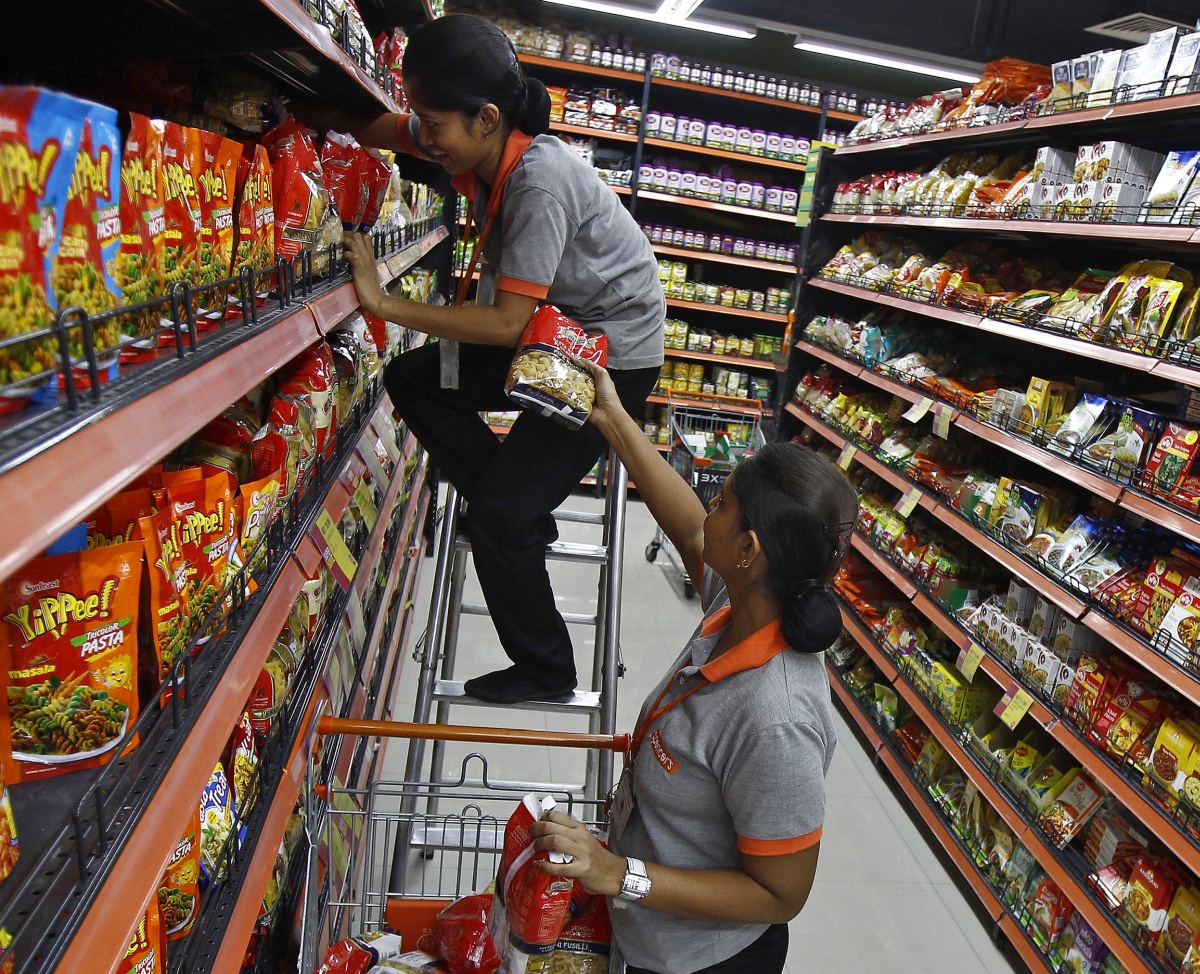
However, rural demand continued to remain a concern for FMCG companies during the quarter.

From the Sensex pack, Bharti Airtel, HDFC Bank, Titan, UltraTech Cement, ITC, Sun Pharma, Bajaj Finserv, Bajaj Finance, Hindustan Unilever and Kotak Mahindra Bank were among the major gainers. Tata Steel, Axis Bank, NTPC, ICICI Bank and IndusInd Bank were the major laggards.

The company's IPO -- the first by a private bank in a decade -- was oversubscribed a staggering 69.62 times.

Tactical investors should have an investment horizon of around six months to one year, long-term investors should stick around for 10 years or more.

tailwinds of a remarkable year and handsome investor returns, Indian equities are set for an eventful journey in 2024, with a slew of local and global cues -- varying from interest rates to Lok Sabha polls to geopolitical happenings. Analysts are of the view that the bull run in the domestic equity market will continue, and over the next 3-6 months, the benchmark indices -- Sensex and Nifty -- could climb up to 7 per cent. In 2023, the 30-share BSE Sensex jumped 11,399.52 points or 18.73 per cent, and the NSE Nifty climbed 3,626.1 points or 20 per cent.

'To achieve a corpus of Rs 10 crores in the coming years, I would suggest you increase your SIP, advises Nikunj Saraf, vice president, Choice Wealth.

From witnessing the dawn of Independence to playing host to annual Republic Day celebrations for over seven decades, the historic Rajpath in India's power capital has seen the colonial rule and basked in the glory of a free, democratic nation.

Maruti was the top gainer in the Sensex pack, rising around 7 per cent, followed by Axis Bank, SBI, IndusInd Bank, Bharti Airtel and NTPC.

On March 11, 2011, a magnitude 9.0 earthquake struck at 2:46 PM Japanese Standard Time off the coast of Japan, unleashing enough seismic force to knock the entire world off its axis by more than six inches. Five years later, here's is a comparative photo-feature showing how much things have changed since then

June was a memorable month for the 101-year-old Tamilnad Mercantile Bank (TMB). Last month, the Thoothukudi-based bank witnessed two new landmarks in a history in which the last three decades could easily qualify for a Kollywood blockbuster.

Bandhan Bank has filed a draft red herring prospectus with Sebi for an IPO of up to 119 million equity shares, with face value of Rs 10 each.

Nikunj Saraf, Vice President Choice Wealth, answers your queries.

A total of 49 companies raised Rs 81,615 crore in Samvat 2077, more than the preceding four years and almost double the amount raised in the previous year. Samvat 2078 appears even more promising with mega issues of Paytm and Life Insurance Corporation (LIC) of India. However, Paytm's record could be short-lived as state-owned LIC is planning to launch a Rs 1-trillion IPO by March 2022.

Banking and capital goods stocks were out of favour, while oil and auto stocks saw buying interest.

It is pouring heavily not only in North India, but at Dalal Street too. However, the latter is seeing a flurry of initial public offers (IPOs). After a busy fortnight that ended on July 7 with seven IPOs - IdeaForge Technology, Cyient DLM, PKH Ventures, Pentagon Rubber, Global Pet Industries, Tridhya Tech, and Synoptics Technologies -- four more IPOs will hit the Street this week, including one mainboard IPO of Utkarsh Small Finance Bank. That apart, India's largest securities' depository National Securities Depository Limited (NSDL) has filed its draft red herring prospectus (DRHP) with the Securities and Exchange Board of India (Sebi) for an IPO.

However, the national party count has gone down to six from 14 in over seven decades.

ITC topped the Sensex gainers' chart with a jump of 3.31 per cent, followed by Reliance Industries, Bajaj Finance, ICICI Bank, Infosys, Axis Bank and Wipro. On the other hand, NTPC, UltraTech Cement, L&T, Sun Pharma, Asian Paints and Maruti were among the major laggards.

Moody's Investors Service on Wednesday raised the rating outlook for 18 Indian corporates and banks, including Reliance Industries, Infosys, SBI and Axis Bank, to 'stable' from 'negative'. This follows the upgrade by the US-based rating agency in India's sovereign rating outlook to 'stable' from 'negative' on Tuesday. The agency had affirmed the sovereign rating at 'Baa3'.

Globally, the focus has moved back to India, especially in terms of telecom assets. Vodafone Idea, with some 300 million customers, continues to be attractive with shares available at a low price.

Omkeshwar Singh, head, Rank MF, a mutual fund investment platform, answers your queries.

M&M was the top loser in the Sensex pack, skidding 3.31 per cent, followed by Reliance Industries, Bajaj Finserv, ICICI Bank, Maruti, Tata Motors and Tech Mahindra. On the other hand, Tata Steel, L&T, Axis Bank, Bharti Airtel and HDFC Bank were among the gainers.

SBI was the biggest loser in the Sensex pack, tumbling 2.83 per cent, followed by Infosys, TCS, Bajaj Finance, Tech Mahindra, Wipro and Axis Bank. In contrast, Titan, L&T, NTPC, Power Grid, Sun Pharma, ITC and HDFC twins were among the prominent winners, rising as much as 1.97 per cent.

rediffGURU Ramalingam Kalirajan answers your personal finance queries.

India may adopt norms similar to the US Federal Reserve model, which regulates conglomerate-led banks in the country.

IndusInd Bank was the biggest loser in the Sensex pack, shedding nearly 2 per cent, followed by Bharti Airtel, Reliance Industries, HDFC twins, SBI, HUL, Tata Motors, Nestle India and Axis Bank. On the other hand, Asian Paints, Tata Steel, Titan and L&T were among the gainers, rising up to 3.03 per cent.

'This segment has performed very well for us and this is reflected in our bounce rate which is about three to four per cent.'
The Reserve Bank may go for a final 25 basis points increase in the current rate hike cycle next week and a reduction would come in only by the end of third quarter of FY24, economists at Axis Bank said on Wednesday. As per media reports, RBI officials met economists on Tuesday, and the latter have suggested the central bank to go for a 25 basis points hike in key rates. Since May 2022, the RBI has hiked rates by 250 basis points, hurting borrowers and some are already concerned about loan tenors extending beyond their working lives as a result of the hikes.

Equity benchmarks declined on Thursday after a two-day rally, mirroring a weak trend in the US markets and fresh foreign fund outflows. Weak US consumer data and hawkish comments from the Fed's policymakers dragged markets lower. The 30-share BSE Sensex dropped 187.31 points or 0.31 per cent to settle at 60,858.43.

'Just the amount of work which is there just to become more and more successful in banking. For this to happen you need to have leaders who understand technology.'
With the economy growing at its slowest rate in a decade, India's banking system is facing rising levels of stressed loans, with $100 billion, or about 10 percent of the total, categorised as bad or restructured.

Among Sensex shares, HDFC Bank fell the most by 2.58 per cent, followed by SBI (2.12 per cent), HDFC (2.09 per cent), and IndusInd Bank (2.02 per cent). Axis Bank, Bajaj Finserv, M&M, L&T, Reliance, Infosys and TCS were among the major losers. In contrast, Tata Motors, Maruti, NTPC, Sun Pharma, Power Grid and Titan were among the gainers.

Billionaire Mukesh Ambani's Reliance Industries Ltd is the most valuable private company in the country, as per Hurun India's 2022 Burgundy Private Hurun India 500 list. The list, which was released on Tuesday, stated that with a value of Rs 16.4 lakh crore, Reliance is India's most valuable company, followed by Tata Consultancy Services (TCS) with Rs 11.8 lakh crore and HDFC Bank with Rs 9.4 lakh crore. Reliance is also the highest taxpayer with a payout of Rs 16,297 crore and the most profitable company with a bottomline of Rs 67,845 crore in 2022-23.

Equity benchmark Sensex declined over 410 points to close below the 61,000-mark on Thursday, tracking weakness in M&M, Bajaj Finserv and Reliance Industries amid widespread selling pressure in global markets. A depreciating rupee also put pressure on domestic equities, traders said. In a subdued session, the 30-share BSE Sensex ended 419.85 points or 0.69 per cent lower at 60,613.70.

From the Sensex pack, Larsen & Toubro jumped 4.26 per cent to emerge as the biggest gainer, followed by IndusInd Bank, Tech Mahindra, State Bank of India, HCL Technologies, Power Grid, NTPC, Axis Bank, Kotak Mahindra Bank, HDFC Bank and Wipro. Mahindra & Mahindra, Infosys, UltraTech Cement and Hindustan Unilever were the major laggards.

More cos could join the likes of Burger King and Antony Waste in giving listing another shot.

M&M was the biggest loser in the Sensex chart, falling 6.39 per cent, followed by Tech Mahindra, Nestle India, Bajaj Finance, Axis Bank, ITC, JSW Steel, HDFC Bank and RIL. On the other hand, Sun Pharma, Tata Motors, Bharti Airtel, L&T and Infosys were among the winners, rising up to 2.10 per cent.

Benchmark BSE Sensex rose by 156 points while the Nifty closed above the 17,300 level on Thursday after gains in metal, IT and capital goods shares amid foreign capital inflows. The 30-share BSE benchmark gained 156.63 points or 0.27 per cent to settle at 58,222.10. During the day, it jumped 513.29 points or 0.88 per cent to 58,578.76.
